
Restorative dentistry
Dental implants replace the whole tooth, root and all
An implant is the only tooth replacement that also replaces the root — that’s why it feels like your own tooth.
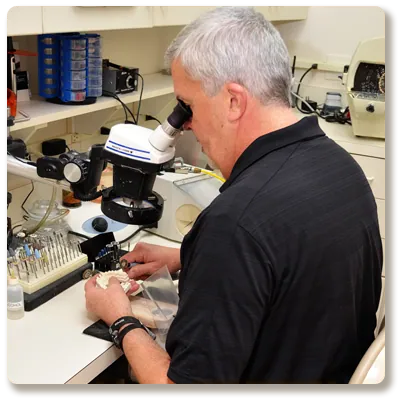
“Dental implants are a popular and effective way to replace missing teeth — designed to blend in with your other teeth, they are an excellent long-term option for restoring your smile.”
Missing a Tooth? Let’s Talk About Getting Your Smile Back.
Missing teeth can change more than your smile. Maybe you’ve stopped eating certain foods. Maybe you hide your teeth in pictures. Or maybe you simply miss feeling comfortable when you smile.
We’d love to help you feel like yourself again.
At Lifetime Smiles, Dr. Jim Forester takes the time to understand your concerns, learn what you want for your smile, and help you explore your options.
What Is a Dental Implant?
A dental implant replaces a missing tooth with a small post placed in the jawbone, topped with a custom-made crown.
The result is a replacement tooth designed to look, feel, and function much like your natural tooth.
Dental implants can help you:
- Replace one missing tooth or several
- Eat and chew more comfortably
- Smile with greater confidence
- Secure loose-fitting dentures
- Help preserve jawbone where teeth are missing
A Smile That Looks Like You
Replacing a tooth isn’t just about filling a gap. It’s about making sure your new tooth looks right alongside the others.
Dr. Forester brings more than 40 years of experience in dentistry and art to his approach to smile restoration. He considers your facial features, your existing teeth, and what you want your smile to look like.
The goal isn’t to give you someone else’s smile. It’s to help you feel good about your own.
What Should You Expect?
We’ll start with a conversation and a careful examination.
Dr. Forester will explain whether implants are a good option, what the process involves, and what alternatives you may want to consider.
Implant treatment typically involves placing the implant, allowing time for healing, and attaching a custom restoration. Some patients may also need bone grafting.
We’ll walk you through the process, answer your questions, and make sure you understand your options before moving forward.
What About Dentures?
If you have several missing teeth or wear dentures that feel loose, implant-supported dentures may be an option.
Implants can help hold dentures more securely, making everyday activities like eating and speaking more comfortable.
We’ll help you understand the differences so you can decide what makes sense for you.
Questions people ask us
Frequently asked questions
Something else on your mind? Call or text (770) 232-1830.
What is a dental implant?
A small titanium post placed in the jawbone that acts as an anchor for a replacement tooth. For one tooth that’s a custom crown; for several, a bridge or denture made to fit your implants. Unlike a bridge, it doesn’t require removing good tooth structure from neighboring teeth.
Source: American Dental Association, MouthHealthy — Implants
Am I a good candidate for implants?
Your health matters more than your age. Chronic illnesses such as diabetes or leukemia can interfere with healing, and tobacco can slow it — so a medical evaluation may come before surgery is scheduled.
Source: American Dental Association, MouthHealthy — Implants
How long does the whole process take?
Three phases: placement, healing, then the replacement tooth. The bone grows around the implant in a process called osseointegration, which takes time — some patients wait until it’s completely integrated, up to several months, before teeth are attached. Some patients can have implants and replacement teeth placed in one visit, and a temporary is often provided while the permanent tooth is made. At Lifetime Smiles, treatment starts with a conversation and a careful examination, and some patients may also need bone grafting.
Source: American Dental Association, MouthHealthy — Implants.
How long do implants last?
Long-term data is strong but not a guarantee. A 2024 meta-analysis of 20-year data found mean survival of 92% in prospective studies and 88% in retrospective studies — roughly 4 in 5 implants still in place at 20 years, dropping to 78% when patients lost to follow-up are factored in. Follow-up doesn’t end after placement.
What if I don't have enough bone?
Not necessarily a no. When bone volume is insufficient, augmentation techniques and graft materials can rebuild the site to create a suitable environment for placement. Whether that’s needed, and which technique, is decided at the exam.
Does smoking affect implants?
Yes. Tobacco can slow healing after surgery, which is why it’s part of the candidacy conversation up front — not something to discover after placement.
Source: American Dental Association, MouthHealthy — Implants
Let’s Talk About Your Smile.
Whether you’re missing one tooth or several, you deserve to know your options without feeling rushed or pressured.
Come meet Dr. Forester. We’ll listen, take a look, and help you decide what comes next.
Learn more: American Dental Association — Dental Implants
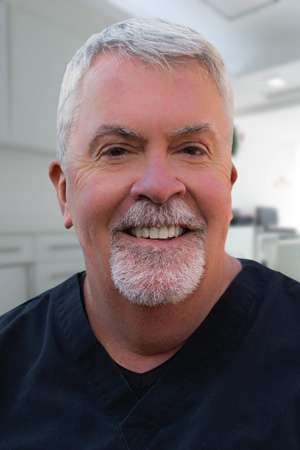
Reviewed by Dr. Jim Forester
James G. Forester, DDS · Emory University School of Dentistry, 1981 · Kois Center Clinical Instructor since 2019 · Practicing in Johns Creek since 1997
Come see us
We can’t wait to see your smile.
Neighbors caring for neighbors, and new faces are always welcome. Call us — we’ll save you a chair.