General dentistry
Oral Cancer Screening
Caught early, oral cancer’s five-year survival rate is over 80% — that’s why we screen at every exam.
“Dentists are often the first health professionals to notice the signs of oral cancer, which can appear inside the mouth and throat or on the tonsils and tongue.”
A Simple Check. An Important Part of Your Visit.
At Lifetime Smiles, oral cancer screenings are part of your routine dental exam. It’s one more way Dr. Forester and our team look after your health, not just your teeth.
What Happens During a Screening?
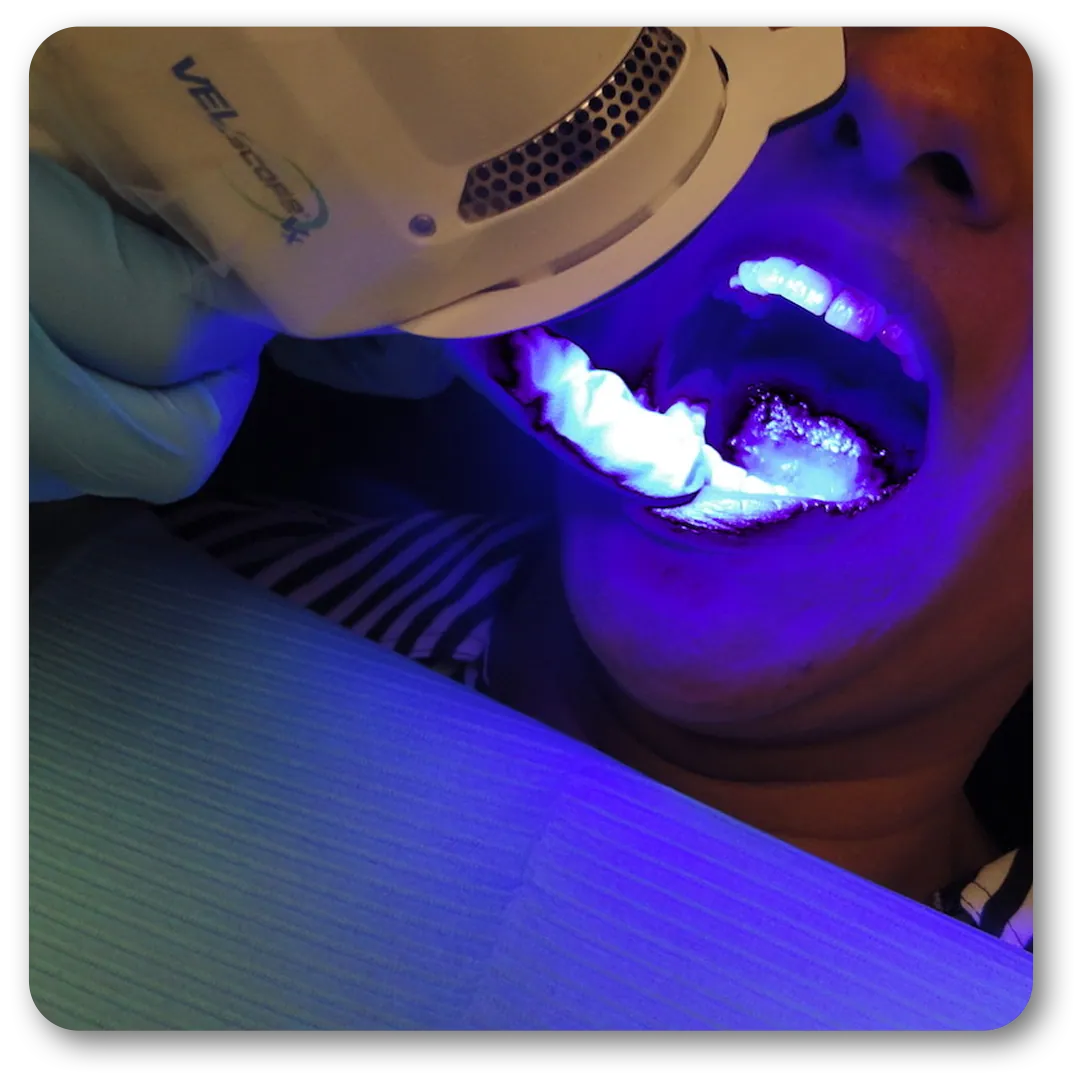
We check your lips, tongue, cheeks, mouth, and neck for unusual changes. We also use VELscope technology as an additional tool to help us examine oral tissues.
The exam is quick, painless, and takes just a few minutes.
Questions people ask us
Frequently asked questions
Something else on your mind? Call or text (770) 232-1830.
What happens during an oral cancer screening?
It’s part of your routine exam. Dr. Forester checks your lips, tongue, cheeks, mouth, and neck for unusual changes, using a visual and tactile exam — the ADA guideline’s recommended starting point for all adult patients.
Source: American Dental Association — Oral Cancer Guideline (living guideline, current). https://www.ada.org/resources/research/science/evidence-based-dental-research/oral-cancer-guideline/
Does a screening hurt, and how long does it take?
No — it’s quick and painless, and takes just a few minutes. No cutting, no downtime.
Source: ADA MouthHealthy — Oral Cancer (current patient guidance). https://www.mouthhealthy.org/all-topics-a-z/oral-cancer
How often should I be screened?
At every routine dental exam, which is how Lifetime Smiles already does it. The ADA guideline recommends an updated history plus an intraoral and extraoral visual and tactile exam in all adult patients.
Source: American Dental Association — Oral Cancer Guideline. https://www.ada.org/resources/research/science/evidence-based-dental-research/oral-cancer-guideline/
What are the warning signs I should watch for between visits?
Call right away if any of these last longer than two weeks: a sore or irritation that doesn’t go away, red or white patches, pain/tenderness/numbness in the mouth or lips, a lump or rough spot, difficulty chewing, swallowing, or speaking, or a change in how your teeth fit together.
Source: ADA MouthHealthy — Oral Cancer. https://www.mouthhealthy.org/all-topics-a-z/oral-cancer
Who is most at risk — and does it only affect smokers?
No. Tobacco and alcohol are major risk factors, but HPV is linked to about 70% of oropharyngeal cancers (tonsils, soft palate, base of tongue), and those can affect people with no tobacco history. Older adults and men are at higher risk overall.
Source: CDC — Head and Neck Cancers Basics, and ADA MouthHealthy — Oral Cancer. https://www.cdc.gov/head-neck-cancer/about/ and https://www.mouthhealthy.org/all-topics-a-z/oral-cancer
If you find something unusual, does that mean it’s cancer?
Not necessarily — most unusual spots aren’t cancer. The next step is usually a follow-up exam a week or two later to see if it clears, and if a lesion is suspicious, the ADA guideline is clear: biopsy immediately, or referral to a specialist. Biopsy, not a light or a scan, is the diagnostic standard.
Source: American Dental Association — Oral Cancer Guideline, and ADA MouthHealthy — Oral Cancer. https://www.ada.org/resources/research/science/evidence-based-dental-research/oral-cancer-guideline/ and https://www.mouthhealthy.org/all-topics-a-z/oral-cancer
Why It Matters
Oral cancer may develop without obvious early symptoms. Regular examinations give us an opportunity to identify suspicious changes and recommend further evaluation when needed.
Most unusual spots aren’t cancer, but anything concerning deserves attention.
Medical references: American Dental Association — Oral Cancer Guideline, Journal of the American Dental Association — 2026 Clinical Guideline, and American Cancer Society — Survival Rates for Oral Cavity and Oropharyngeal Cancer.
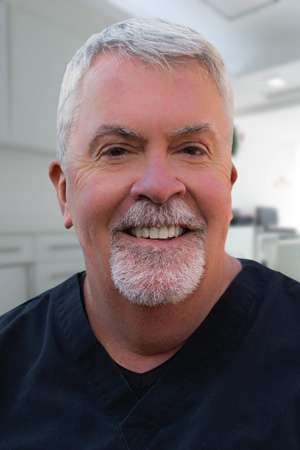
Reviewed by Dr. Jim Forester
James G. Forester, DDS · Emory University School of Dentistry, 1981 · Kois Center Clinical Instructor since 2019 · Practicing in Johns Creek since 1997
Come see us
We can’t wait to see your smile.
Neighbors caring for neighbors, and new faces are always welcome. Call us — we’ll save you a chair.