
Restorative dentistry
Dentures & Partials
George Washington’s dentures weren’t made of wood — they were ivory, gold, and metal springs.
“Dentures are removable appliances that can replace missing teeth and help restore your smile.”
Do you know that dentures can stop fitting well over time and may need to be relined or remade?
Is it time to replace your existing dentures?
Are you interested in implant-supported dentures so you don’t have to worry about loose dentures ever again?
Do you have a bunch of missing teeth that you don’t want to look at any longer?
If you can relate to any of these questions, we can help at Lifetime Smiles.
Advantages and Disadvantages of Dentures
A denture is a removable appliance that fits securely in the mouth. The purpose of dentures is to replace missing teeth and the surrounding tissue. (Source: American Dental Association — MouthHealthy)
Many years ago, dentures had several disadvantages: they fit poorly, felt bulky, and often were painful. Nowadays, dentures are the opposite. Our patients love the fact that dentures offer several benefits.
Dentures that let him say yes to dinner again
His dentures slipped when he ate and clicked when he laughed, so he started turning things down: dinners with friends, his grandson’s birthday at a restaurant, anything with a table full of people and a plate of real food. By the time he sat in our chair, he wasn’t really asking about teeth. He was asking whether he had to keep living smaller.
Here’s what we tell people in his spot: dentures are not all the same, and fit is most of the battle. A set made carefully, for your mouth, checked and adjusted as you get used to it, is a different experience than one you’ve just been putting up with. Start with a conversation. Bring the old set. We’ll look together.
- Dentures are comfortable.
- Dentures fit securely, and they do not come loose.
- Dentures can be more secure when dental implants are placed.
- Dentures allow patients to eat, chew, and speak properly and effectively. (Source: American Dental Association — MouthHealthy) Patients do not have to worry about being unable to do these simple tasks.
- Dr. Forester will choose a color for the dentures so they closely resemble your natural teeth.
Dentures can be custom made to fit comfortably and securely. If you already have dentures that are loose, you can benefit from implant-supported dentures. The dental implant will add that extra support you need for the dentures. You will not have to worry about the possibility of your dentures coming loose or falling out.
If you need repairs done to the dentures, we can do that, too.
Dentures from Lifetime Smiles
At our office, we offer 2 types of dentures:
1. Traditional Dentures (full and partial)
Partial dentures are used to fill in the spaces made by missing teeth. This also helps to prevent existing teeth from shifting and causing other problems.
Full dentures are used when a patient does not have teeth.
2. Dental Implant Supported Dentures
Dental implant supported teeth are chosen for extra support and functionality. Dr. Forester will perform an evaluation to determine whether or not implant supported dentures are right for you.
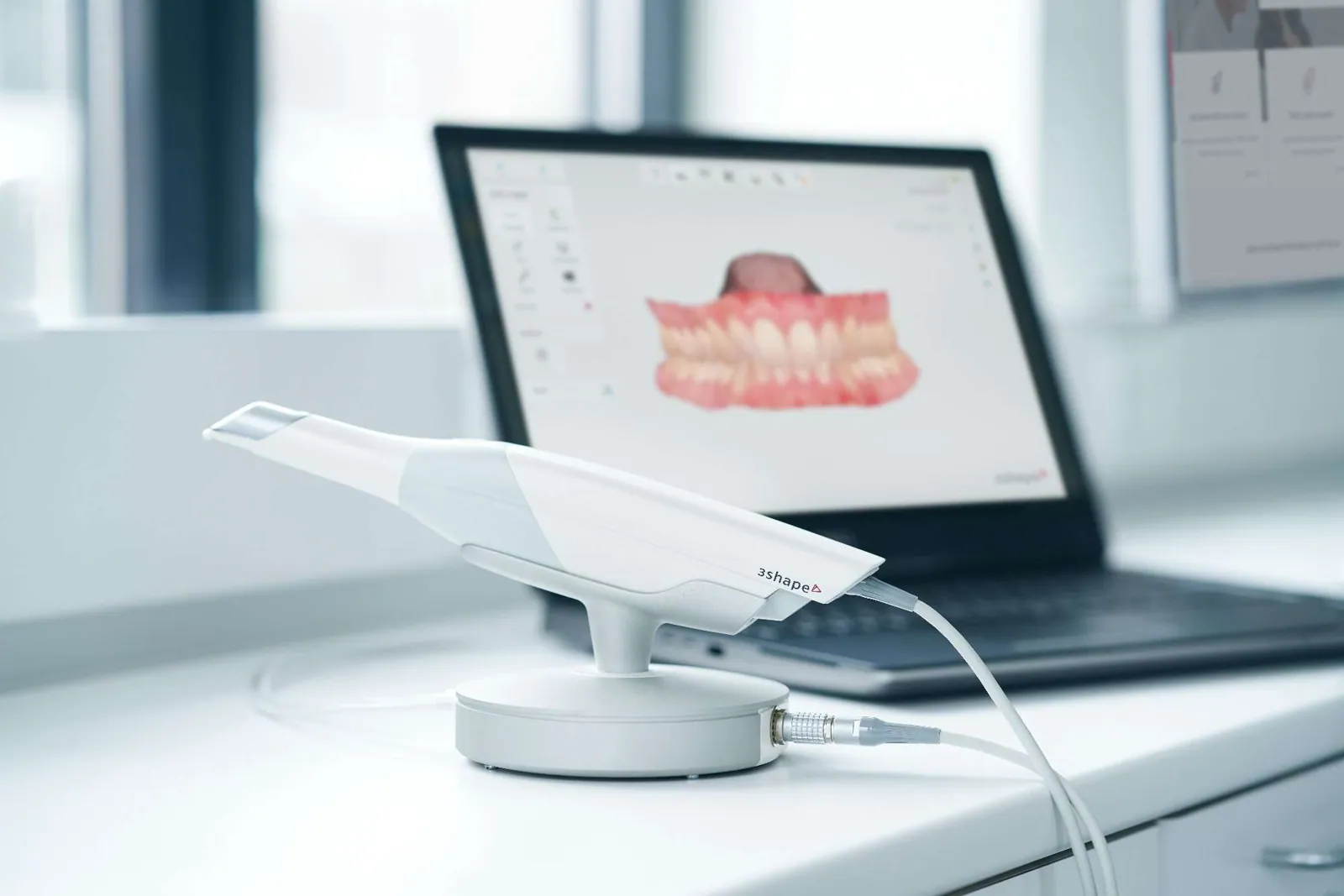
We use the 3Shape TRIOS® scanner instead of goopy impression trays. A small wand takes a 3D picture of your teeth in a few minutes. You see the scan on the screen as we take it, so we can walk you through what we’re looking at.
With 3Shape TRIOS, you can visualize your dental treatment like never before. By providing detailed scans in vibrant, lifelike colors, this technology helps your dentist explain your current dental health and proposed procedures clearly, empowering you to make informed decisions about your care. It enhances your overall dental experience.
Benefits of Using 3Shape TRIOS®
- Enjoy a faster, mess-free process without the need for traditional impression materials.
- Experience greater comfort with a lightweight, wireless scanner that avoids the bulky trays of the past.
- See realistic, high-quality images of your teeth and gums in real-time.
- Gain better insights into your dental health with advanced apps that showcase potential outcomes and treatment options.
- Reduce the likelihood of retakes, as digital scans are more accurate and minimize errors compared to traditional methods.
- Participate in treatment planning through improved patient-dentist communication tools, including before-and-after visuals of your smile.
- Save time during visits, allowing for quicker procedures and more efficient care.
- Access a broader range of treatment options, including same-day restorations and advanced orthodontic solutions.
Call Us Today!

Are you ready to regain full functionality of your teeth? Are you sick of looking at the empty spaces where your natural teeth once were located? Are you sick and tired of your dentures coming loose, or feeling paranoid around other people at the thought of loose dentures?
We can help you. You do not have to suffer from missing teeth problems any longer.
Dr. Forester will complete a full evaluation and speak with you about your smile problems. We can help you regain the confidence in your smile that you once had years ago.
Questions people ask us
Frequently asked questions
Something else on your mind? Call or text (770) 232-1830.
What's the difference between full, partial, and implant-supported dentures?
A partial fills spaces left by missing teeth and helps keep existing teeth from shifting. A full denture is used when a patient has no teeth. An implant-supported denture uses implants for extra support and functionality — Dr. Forester evaluates whether that’s right for you.
Source: American Dental Association, MouthHealthy — Dentures
Will new dentures feel strange at first?
They may feel awkward for a few weeks until you become accustomed to them. They may feel loose while the muscles of your cheek and tongue learn to keep them in place, and minor irritation or soreness is not unusual. Follow-up appointments are generally needed so fit can be checked and adjusted — and if irritation or soreness persists, that’s a reason to come in, not to put up with it.
Source: American Dental Association, MouthHealthy — Dentures
How do I clean and care for dentures?
Like your teeth, dentures should be brushed daily: rinse first, then use a soft-bristle brush and a non-abrasive cleanser on all surfaces so they don’t get scratched. Brush your gums, tongue, and roof of your mouth each morning before inserting them, and when you’re not wearing them, keep them covered in water so they don’t warp. Keep regular checkups so fit can be examined.
Source: American Dental Association, MouthHealthy — Dentures
Why do dentures stop fitting well over time?
Mouths change, and a fit that was right at delivery may not stay right. Dentures can stop fitting well and may need to be relined or remade. If yours stop fitting well or become damaged, come in — regular checkups include examining whether they continue to fit properly.
Source: American Dental Association, MouthHealthy — Dentures
Will I be able to eat and speak normally?
Dentures are made to replace missing teeth and surrounding tissue so eating and speaking are easier than without teeth — and they can fill out the face and closely resemble natural teeth. There’s an adjustment period, and if looseness is the problem, implant support is the option the practice evaluates for extra stability.
Source: American Dental Association, MouthHealthy — Dentures
What if my dentures are loose now, or need repair?
Bring the old set in and start with a conversation. Loose dentures may benefit from implant-supported dentures, which add support, and repairs can be done here too. What fits your mouth is decided at the evaluation, not from the old set alone.
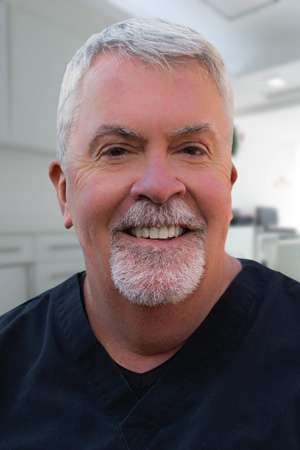
Reviewed by Dr. Jim Forester
James G. Forester, DDS · Emory University School of Dentistry, 1981 · Kois Center Clinical Instructor since 2019 · Practicing in Johns Creek since 1997
Come see us
We can’t wait to see your smile.
Neighbors caring for neighbors, and new faces are always welcome. Call us — we’ll save you a chair.